Discover Turkish Delight, its history, flavors, cultural meaning, and why
this traditional Turkish sweet remains famous around the world.
Some flavors disappear quickly, others stay in memory long after the taste
is gone.
Turkish Delight belongs to the second. Soft, delicate, and dusted with
powdered sugar, Turkish Delight is more than a dessert in Turkey — it is part
of tradition, hospitality, and everyday culture.
A Sweet with Centuries of History
The story of Turkish Delight, known in Turkey as lokum, dates back
centuries to the Ottoman Empire.
Created as a softer alternative to hard candies of
the time, it quickly became associated with: palace, culture, celebration, hospitality.
Over time, it spread far beyond Anatolia and became one of the most
recognizable elements of Turkish cuisine and culture. Today, Turkish
Delight is known around the world, but its roots remain deeply connected to
Turkey.
What Makes Turkish Delight Unique?
Unlike many modern sweets, Turkish Delight is not
defined by richness or heaviness. Its texture is what makes it special: soft, slightly
chewy, delicate and light
Traditionally made from: honey, starch, water, natural
flavorings. It creates a texture that feels almost impossible to describe until
tasted. This is why authentic Turkish Delight feels very different from
mass-produced versions found elsewhere.
Flavors That Reflect Tradition
Turkish Delight exists in countless varieties. Some
of the most traditional flavors include: rose, pistachio, pomegranate, lemon, mint,
walnut. Each flavor carries a slightly different character.
Some are floral and subtle, others are rich and nutty.
Together, they reflect the diversity of traditional Turkish sweets.
More Than Candy
In Turkey, Turkish Delight is rarely eaten in isolation.
It is usually served: with Turkish coffee, beside
tea, during conversations with guests
The experience is social as much as culinary. Offering sweets to visitors
has long been associated with generosity and hospitality.
A Sweet Connected to Memory
Many travelers remember their first encounter with Turkish Delight clearly.
A small shop filled with colors, powdered sugar on fingertips, the scent of
rosewater and nuts.
These details make the experience feel emotional rather than simply edible.
The Art of Presentation
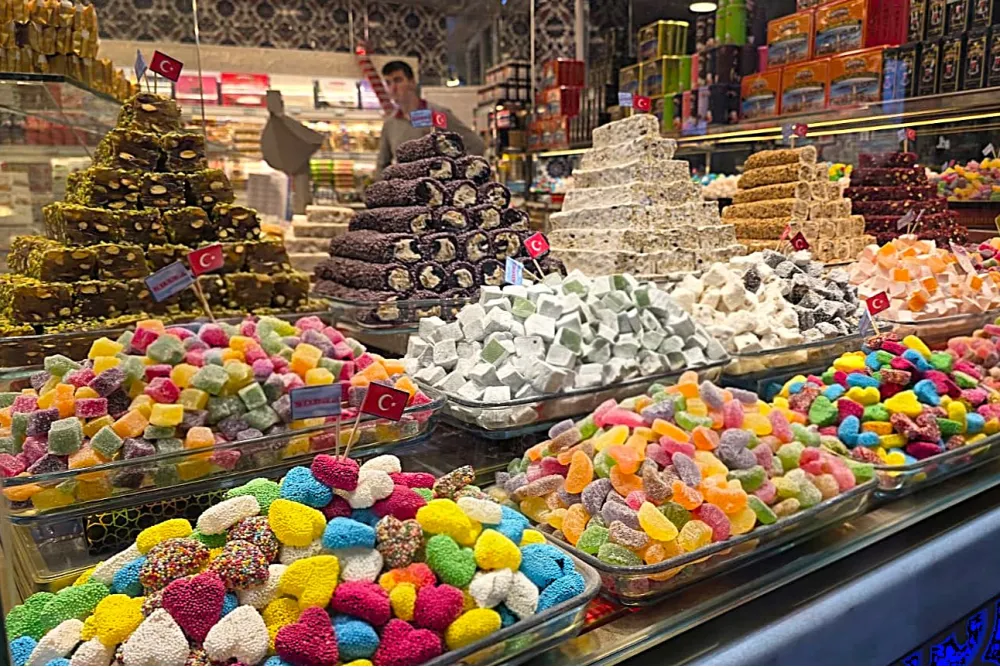
One of the beautiful things about Turkish Delight is how carefully it is
often displayed. Rows of color, layered textures, boxes arranged almost like
jewelry. In historic sweet shops across Turkey, presentation itself becomes
part of the tradition.
This visual richness is part of why Turkish Delight in Turkey feels
so memorable.
A Photographer’s Perspective
Your photos will naturally work beautifully for this subject.
Turkish Delight offers: vibrant colors, powdered
textures, geometric arrangements, warm ambient shop lighting.
Especially focus on: close-up texture shots, pistachio
and nut details, traditional serving presentations, Turkish Delight beside tea
or coffee.
Why It Continues to Endure
Trends in desserts constantly change. Yet Turkish
Delight continues to survive because it is tied to something deeper: ritual, hospitality,
memory, cultural identity.
It represents a slower and more traditional way of enjoying sweetness.
Beyond Taste
Turkish Delight is not simply about flavor.
It is about: pause, conversation, sharing, atmosphere.
A small piece offered at the right moment can become part of how people
remember a place.
Final Thoughts
Some desserts are made to impress. Turkish Delight is made to linger.
Soft in texture.
Rich in history.
Quietly connected to centuries of culture and hospitality.
And perhaps that is why it remains one of Turkey’s most enduring flavors.