Pamukkale is one of
Turkey’s most visually striking landscapes.
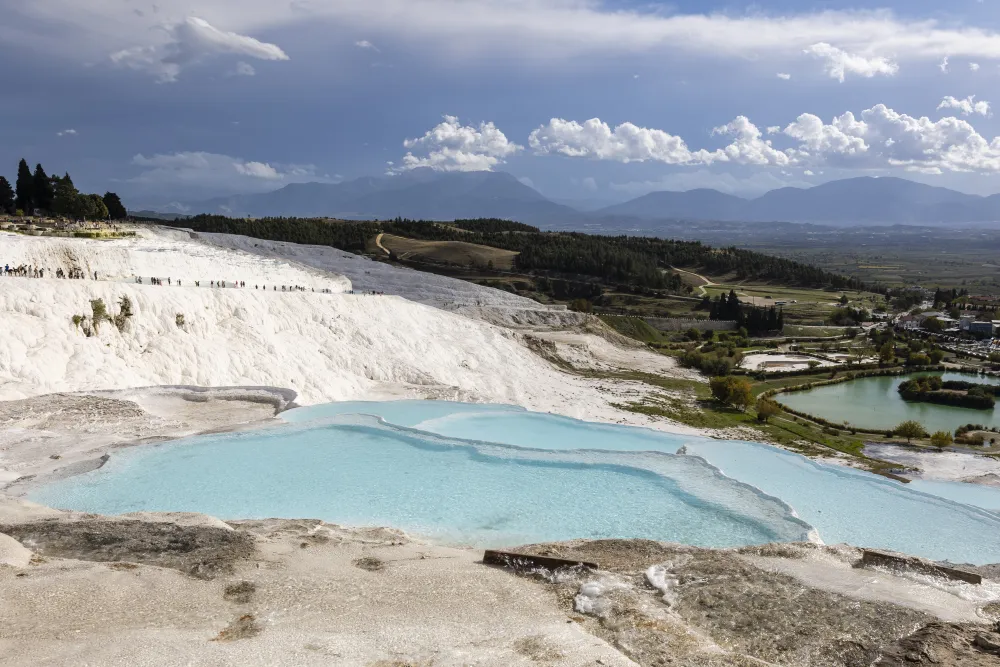
Its white terraces, formed by mineral-rich thermal waters, create a scene that
feels almost unreal — yet deeply connected to natural processes that have
continued for thousands of years.
Combined with the ancient
city of Hierapolis above, Pamukkale offers a rare blend of nature and history
in a single setting.
What Is Pamukkale?
Pamukkale, meaning
“Cotton Castle,” is a natural formation created by thermal waters flowing down
a hillside.
As the water cools, it
leaves behind layers of calcium-rich deposits, forming white travertine
terraces and shallow pools. These formations are constantly shaped and renewed
by flowing water.
Why Pamukkale Is
Included in Turkey Tours
Pamukkale adds natural
contrast to itineraries focused on cities and archaeological sites.
After walking through
stone streets and historic monuments, this landscape introduces movement,
openness, and light. It shows how nature itself can become a central
attraction.
The Role of Thermal
Waters
The thermal waters of
Pamukkale have been valued since ancient times.
People believed in their
healing properties, which led to the establishment of Hierapolis — a Roman city
built above the terraces. Baths, temples, and public spaces developed around
this natural resource.
Understanding this
connection explains why history and nature coexist so closely here.
Walking on the
Travertines
Visitors walk barefoot
along designated paths to protect the formations.
The experience is gentle
and unhurried, allowing time to observe the textures, water flow, and
surrounding views. This interaction makes the visit more immersive than simple
observation.
Hierapolis: History
Above the White Terraces
Just above Pamukkale lies
the ancient city of Hierapolis.
Its ruins include:
Together, Pamukkale and
Hierapolis explain how natural features influenced urban development in the
ancient world.
A Calm and Expansive
Atmosphere
Despite its popularity,
Pamukkale offers moments of quiet.
Wide open spaces, flowing
water, and distant views create a sense of calm that balances the scale of the
site. Visitors often find the experience both refreshing and grounding.
The Value of Guided
Visits
With explanation,
Pamukkale becomes more than a scenic stop.
A guide can explain:
This context deepens
appreciation without changing the relaxed nature of the visit.
Final Thoughts
Pamukkale is not just a
natural wonder.
It is a place where water, stone, and history come together naturally. Including Pamukkale in a tour adds visual impact, balance, and a clear reminder of how nature has shaped human settlement for centuries.