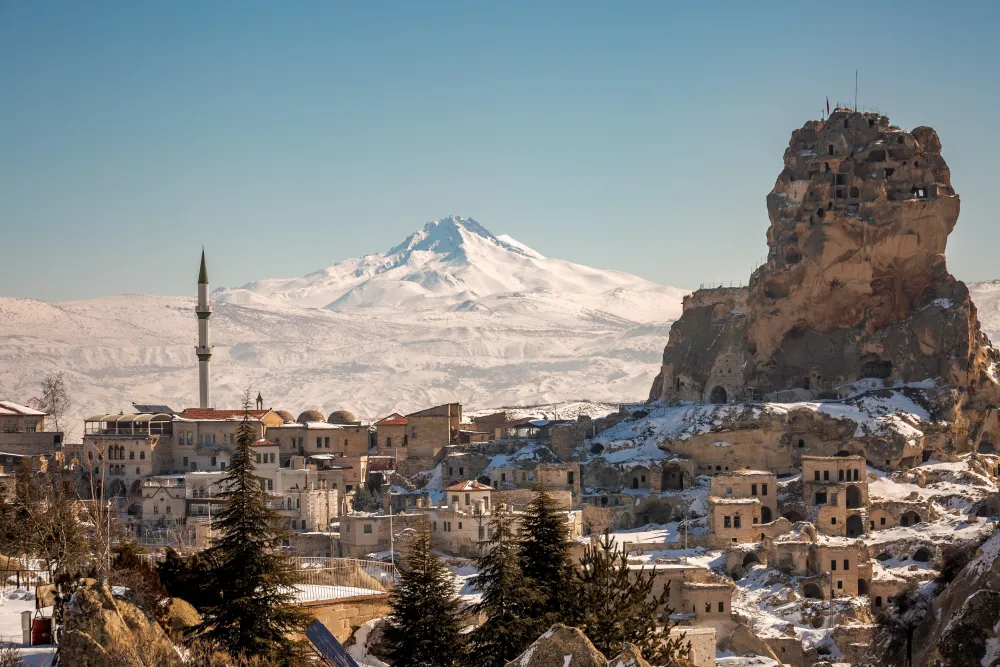
Rising proudly above the plains of Central Anatolia, Mount Erciyes is one of Turkey’s most impressive natural landmarks. Located just south of Kayseri, this magnificent volcanic mountain has shaped the region’s geography, history, and culture for thousands of years.
For travelers exploring Cappadocia and Central Anatolia, Erciyes is far more than a distant snow-covered silhouette on the horizon — it is a symbol of power, beauty, and adventure.
A Volcano That Shaped History
Mount Erciyes stands at 3,917 meters (12,851 feet), making it the second highest mountain in Turkey, after Mount Ararat. Unlike Ararat, however, Erciyes is part of daily life for the people of Central Anatolia.
Erciyes is an extinct stratovolcano that last erupted millions of years ago. Those ancient eruptions played a crucial role in forming the unique landscapes of Cappadocia. The soft volcanic rock created by Erciyes and neighboring volcanoes was gradually shaped by wind and water into the fairy chimneys, valleys, and cave dwellings that today attract travelers from around the world.
In ancient times, the mountain was known as “Argaeus.” During the Roman period, it appeared on coins minted in Kayseri (then called Caesarea), symbolizing its importance to the region. Throughout history, Erciyes has been a landmark for traders, travelers, and civilizations passing through Anatolia.
Turkey’s Second Highest Mountain
Being Turkey’s second tallest peak gives Erciyes a special status. Its impressive height and permanent snow cap make it visible from many parts of Central Anatolia. On clear days, the mountain dominates the skyline — a dramatic contrast against the vast Anatolian plateau.
For climbers and mountaineers, Erciyes offers challenging routes, especially in winter conditions. While not as technical as some alpine peaks, its altitude and weather conditions require proper preparation and professional guidance.
A Premier Winter Sports Destination
In recent years, Erciyes has become one of Turkey’s leading winter sports centers. The Erciyes Ski Resort offers:
Over 100 kilometers of ski slopes
Modern gondola and chairlift systems
Slopes suitable for beginners, intermediate, and advanced skiers
Snowboarding areas
Professional ski schools
Thanks to its high altitude, the ski season typically runs from December to April, with reliable snow quality. Compared to more crowded European resorts, Erciyes offers wide slopes, modern infrastructure, and excellent value.
For travelers visiting Cappadocia in winter, combining a hot air balloon experience with a day of skiing on Erciyes creates a unique and unforgettable Anatolian adventure.
Summer on Erciyes
Erciyes is not only a winter destination. In summer, the mountain transforms into a haven for:
Hiking and trekking
Mountain biking
High-altitude training camps
Photography and nature exploration
The cooler mountain climate offers a refreshing escape from the summer heat of Central Anatolia. Wildflowers bloom along the lower slopes, and panoramic views stretch across the vast Anatolian landscape.
Why Include Erciyes in Your Turkey Journey?
Whether you are a nature lover, history enthusiast, adventure traveler, or winter sports fan, Mount Erciyes offers a unique experience.
Its connection to Cappadocia’s geological formation, its status as Turkey’s second highest peak, and its modern ski facilities make it a destination that combines natural beauty with cultural depth.
For travelers exploring Central Anatolia, Erciyes is not just a mountain — it is a living symbol of the region’s volcanic past and dynamic present.
If you are planning a trip to Cappadocia or Kayseri, consider adding Erciyes to your itinerary — in winter for skiing, or in summer for breathtaking panoramic views above the Anatolian plateau.