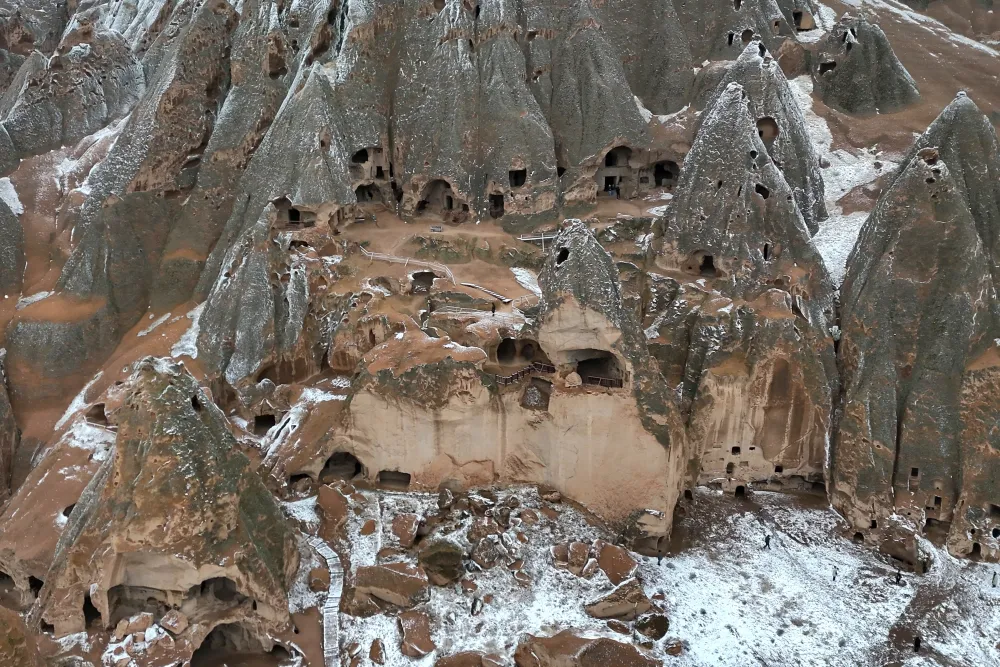
Cappadocia is full of
surprises—fairy chimneys, ancient cave dwellings, and sweeping valleys—but few
places capture the region’s mysterious side quite like Kaymaklı Underground
City. Hidden beneath the soft volcanic rock, this remarkable multi-level
settlement gives visitors a glimpse into an entirely different world, one
carved by hand and shaped by centuries of survival, faith, and community.
Unlike Cappadocia’s
balloon-filled skies, Kaymaklı’s magic lies underground. The moment you step
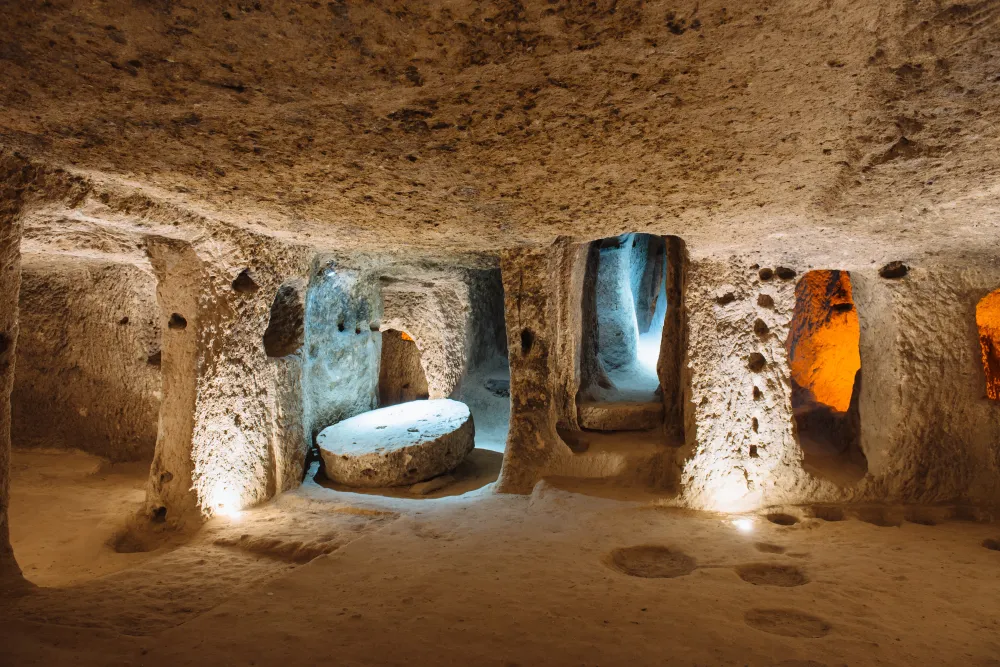
inside, the atmosphere changes. The air becomes cooler, the walls narrow, and
the soft light reveals tunnels that twist deeper into the earth. It feels almost
like time travel—an opportunity to walk through the same passages used by
ancient families who once lived, cooked, worshiped, and hid here.
Kaymaklı is one of the
largest and most impressive underground cities in Cappadocia. What makes it
especially fascinating is its complexity: eight levels in total, with four open
to visitors. As you move from one chamber to the next, you quickly realize that
this wasn’t just a temporary shelter. It was a fully functioning community,
complete with stables, kitchens, living rooms, cellars, and even wine storage.
The ingenuity is remarkable; every space was designed with purpose,
ventilation, and safety in mind.
One of the first chambers
you'll encounter is the stable area, where families kept their animals safe
during long stays underground. From there, the tunnels become narrower, leading
to communal rooms carved into the rock. Many visitors are surprised at how
organized the layout feels. Large round stones—ancient security doors—still sit
beside certain passageways, ready to be rolled into place to block intruders.
These details make it easy to imagine how people lived here during periods of
conflict or invasion.
Ventilation shafts,
another highlight of Kaymaklı’s engineering, run deep through the complex. Some
descend over 50 meters, channeling fresh air throughout the city. These shafts
also helped distribute smoke from kitchens, making long-term living possible.
When guides explain how residents lit fires, stored food, and created
communication routes between rooms, the underground city begins to feel like a
world unto itself—one that was ahead of its time.
As visitors descend
further, the spaces become more intimate. Narrow corridors lead to small family
rooms, storage areas, and communal kitchens. Some travelers find the tunnels
tight, while others enjoy the sense of adventure. Either way, the experience is
unforgettable. Many American guests describe it as similar to exploring an
ancient labyrinth—each turn revealing something new.
One of the most
impressive sections is the church area. Although small and simply carved, it
reminds visitors that faith played an essential role in daily life. Over time,
Kaymaklı became more than just a place to hide; it was a place to live,
worship, trade, and raise families during uncertain periods.
The best way to visit
Kaymaklı is with a local guide who can explain the history behind each room and
passage. Many details—such as why small holes were carved into certain walls,
or how families communicated between levels—are easy to miss without someone
who knows the site well. Guided tours also make navigating the underground
tunnels smoother, especially during busy hours.
For travelers exploring Cappadocia, Kaymaklı Underground City offers a powerful contrast to the region’s open landscapes. Above ground, you have wide valleys and balloon-filled skies; below ground, you discover a hidden world shaped by human resilience. It’s one of those experiences that stays with visitors long after they’ve climbed back into the sunlight.