Discover Kayaşehir in Nevsehir, a remarkable rock-cut settlement beneath
the city's historic castle, revealing another fascinating side of Cappadocia.
Cappadocia is famous for its underground cities, fairy chimneys and ancient
cave dwellings.
But what if an extraordinary piece of history was hiding beneath the
streets of a modern city?
In the heart of Nevsehir, just below the historic Nevsehir Castle, lies
Kayasehir, a fascinating rock-cut settlement that offers a different
perspective on Cappadocia's past.
Unlike the region's famous valleys, Kayasehir tells a story of history
rediscovered in the middle of everyday urban life.
A Remarkable Discovery Beneath the City
In 2014, urban redevelopment work around Nevsehir Castle brought renewed
attention to an extensive network of historic rock-cut spaces.
As modern buildings were cleared, a remarkable landscape of carved rooms,
passages and interconnected structures became visible.
What emerged was more than a collection of caves.
It was evidence of generations of people adapting Cappadocia's volcanic
landscape to their daily needs.
Parts of Kayasehir were opened to visitors in 2020, giving travelers an
opportunity to explore this lesser-known chapter of Nevsehir's history.
Sometimes, the most surprising discoveries are hiding in places people pass
every day.
More Than an Underground City
Kayasehir is often described as an underground city, but its character is
more complex.
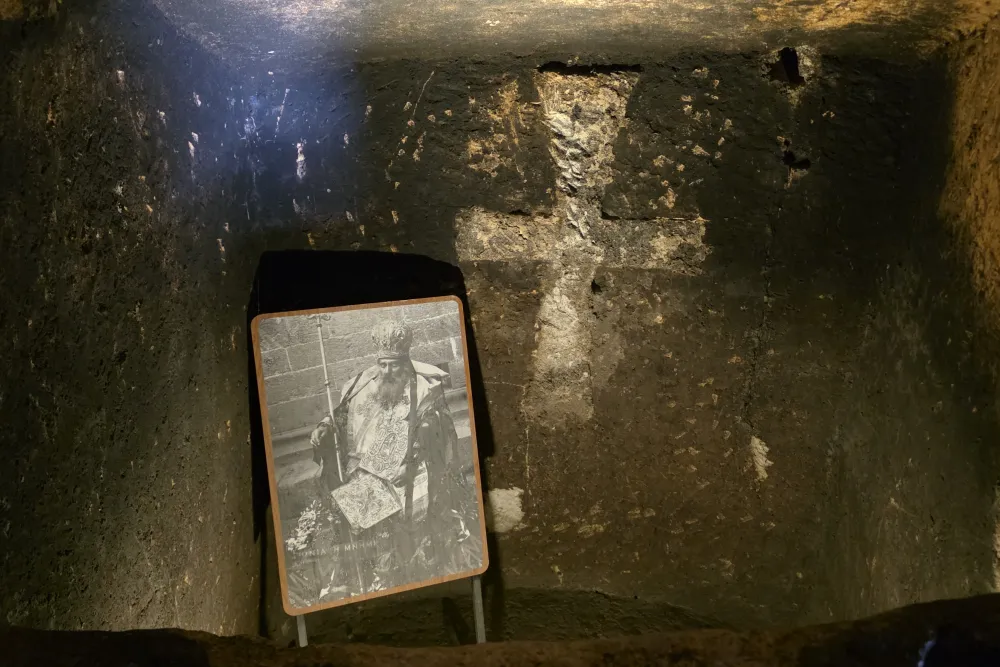
The settlement includes rock-cut chambers, tunnels, storage spaces,
water-related structures and places associated with religious and everyday
activities.
These features suggest a community that used the surrounding rock not
simply for shelter, but also for living, working and storing essential
supplies.
Walking among these spaces encourages a fascinating question:
What was daily life like for the people who once occupied them?
Bee Travel Tip: Combine your
visit to Kayasehir with time around Nevsehir Castle. Seeing the historic
settlement and the surrounding city together helps you understand how different
periods of local history overlap.
A Castle Above Centuries of History
Nevsehir Castle rises above Kayasehir, creating one of the most distinctive
historical landscapes in the city.
The surrounding settlement reflects different periods of Anatolian history,
including Byzantine religious heritage and later Turkish architectural
influences.
Among the structures identified in the area are rock-cut churches,
workshops, stables and passages that reveal how the hillside was adapted over
time.
The result is a remarkable meeting point between ancient Cappadocia and
modern Nevsehir.
Bee Travel Insight: A Different Side of Cappadocia
Most visitors associate Cappadocia's underground heritage with Derinkuyu or
Kaymaklı.
Kayasehir offers something different.
Rather than exploring only enclosed underground passages, visitors can
discover a wider hillside settlement where rock-cut architecture and the
surrounding urban landscape exist side by side.
It reminds us that Cappadocia's history is not limited to its famous
tourist villages.
Is Kayasehir Worth Visiting?
For travelers interested in archaeology, architecture and lesser-known
historical places, Kayasehir is certainly worth considering.
Its central location makes it particularly appealing for visitors who want
to explore Nevsehir beyond the usual Cappadocia itinerary.
Not every section of the historic settlement is open to the public, so it's
important to follow designated visitor routes.
Bee Travel Recommendation: Include
Kayasehir and Nevsehir Castle in a cultural exploration of the wider Cappadocia
region. Rather than treating them as a quick photo stop, allow time to
appreciate the relationship between the historic settlement and the modern
city.
Beyond the Classics
Kayasehir reminds us that history doesn't always disappear.
Sometimes, it remains hidden beneath newer layers of life, waiting to be
rediscovered.
At Bee Travel Turkey, we believe that discovering Cappadocia means looking
beyond its most famous valleys and underground cities.
Because sometimes, exploring the past doesn't require traveling far from
the city.
It simply requires looking beneath it.