Discover Erdemli Valley in Kayseri, a hidden Byzantine settlement with
ancient rock-cut churches, remarkable frescoes and centuries of history.
Cappadocia is famous for its fairy chimneys, underground cities and
extraordinary rock-cut churches.
But beyond the familiar tourist routes, there are places where the region's
history feels surprisingly untouched by modern tourism.
One of them is Erdemli Valley, near Yesilhisar in Kayseri
Province.
Hidden among volcanic rock formations, this remarkable valley preserves the
remains of a Byzantine community that once lived, worked and worshipped here.
And unlike Cappadocia's most famous attractions, Erdemli offers a quieter
way to explore the region's extraordinary past.
A Forgotten Byzantine Settlement
Between the 10th and 13th centuries, Erdemli Valley was home to a thriving
Byzantine settlement.
Its inhabitants carved much more than churches into the soft volcanic rock.
Archaeological research has identified monasteries, houses, kitchens and
ovens, wine-production facilities, monks' cells and dovecotes.
Together, these structures reveal an entire community.
Imagine families preparing food, craftsmen working, monks following their
daily routines and local people gathering for religious ceremonies.
Erdemli wasn't simply a place of worship. It was a place where life
happened.
Churches Hidden Among the Rocks
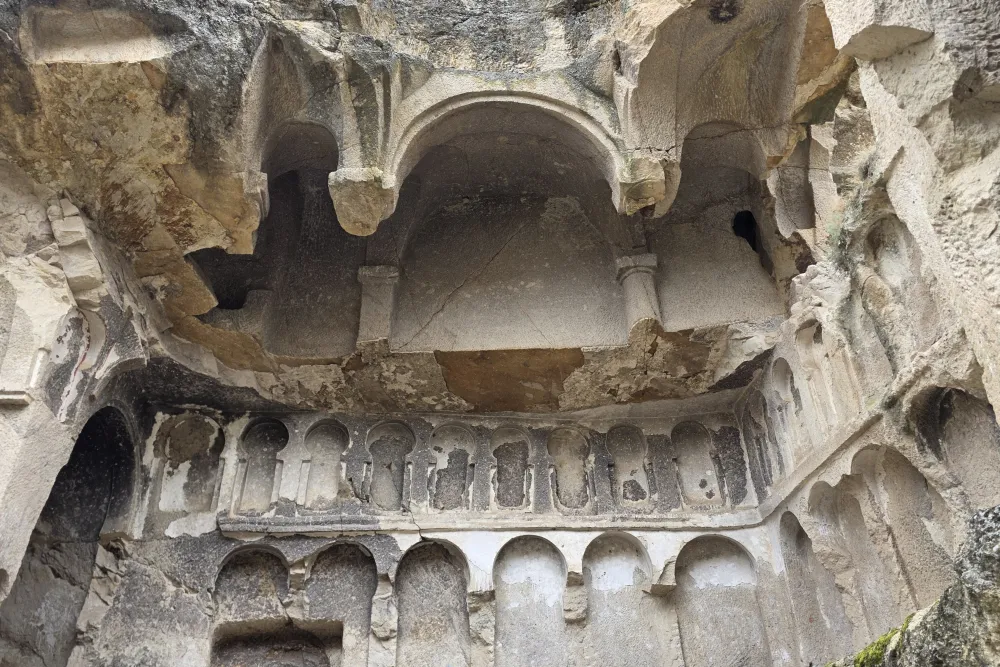
The valley is particularly notable for its rock-cut churches.
Among them are churches dedicated to St. Nicholas, St. Eustathios,the Twelve Apostles and the Forty Martyrs.
Inside some of these structures, surviving frescoes depict biblical
stories, saints, angels and religious figures.
The paintings and architectural details are generally dated to the
10th–13th centuries.
Although some decorations have faded over time, they still offer a
fascinating connection to the people who once inhabited the valley.
Bee Travel Tip: Bring
comfortable walking shoes and allow time to explore the accessible sections of
the valley. Some rock-cut structures have uneven surfaces, and access to
individual interiors may vary.
A Landscape Shaped by Nature and History
Erdemli Valley owes its distinctive appearance to the volcanic history of
Mount Erciyes.
Over time, flowing water eroded the volcanic deposits, creating the
canyon-like landscape visible today.
Later, people transformed parts of these natural formations into homes,
churches and working spaces.
This relationship between geology and human settlement is one of the most
fascinating aspects of the wider Cappadocia region.
Here, nature provided the landscape.
People turned it into a home.
Bee Travel Insight: Look Beyond the Frescoes
When exploring Cappadocia's rock-cut heritage, it's easy to focus entirely
on decorated churches.
But Erdemli tells a broader story.
Its ovens, dwellings and wine-production spaces help us imagine how
ordinary people lived alongside the religious communities.
Sometimes the simplest surviving structures reveal just as much history as
the most impressive paintings.
Is Erdemli Valley Worth Visiting?
For travelers interested in Byzantine history, archaeology, photography or
lesser-known Cappadocian landscapes, Erdemli is an excellent destination to
consider.
It can also complement a visit to nearby Soganli Valley, another remarkable
area known for its rock-cut churches and historic settlements.
However, Erdemli is better suited to travelers who have enough time to
explore beyond Cappadocia's classic highlights.
Bee Travel Recommendation: Consider
combining Erdemli and Soganli in a relaxed cultural excursion. A knowledgeable
local guide can help connect the churches, everyday living spaces and wider
history of the region.
Beyond the Classics
Some historical sites impress visitors with enormous monuments.
Others reveal their importance through the traces of everyday life.
Erdemli Valley belongs to the second group.
At Bee Travel Turkey, we believe exploring Turkey means discovering not
only its famous landmarks but also the quieter places where centuries of human
history remain visible.
Because sometimes, the most fascinating stories aren't written in books.
They're carved into the rocks.