Standing gracefully along
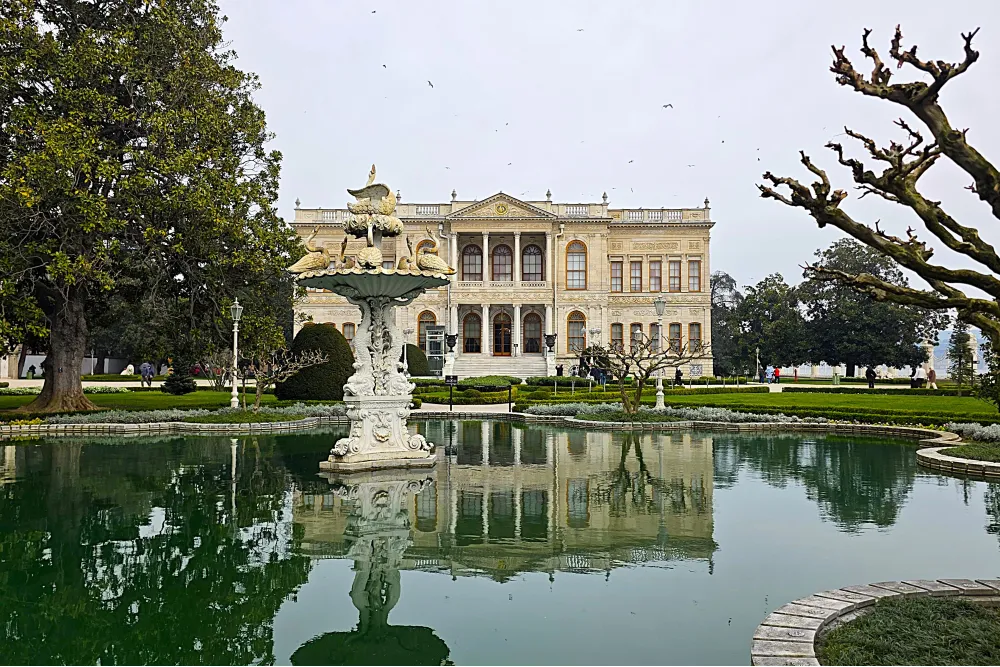
the Bosphorus shoreline, Dolmabahçe Palace represents a turning point in
Ottoman history. Unlike earlier imperial residences that reflected traditional
Ottoman architecture, this palace embraces European styles while preserving imperial
grandeur. For travelers, Dolmabahçe is not just a palace—it is a symbol of
transformation, ambition, and the final chapter of an empire.
The Birth of a Modern
Palace
Dolmabahçe Palace was
commissioned in the mid-19th century as the Ottoman Empire sought to modernize
and align itself with Europe. The palace replaced older wooden waterfront
residences and became the new administrative center of the empire. Designed with
strong influences from Baroque, Rococo, and Neoclassical architecture, it
marked a deliberate shift away from the classical Ottoman palace tradition.
Architectural Grandeur
on the Bosphorus
From the moment visitors
step through the palace gates, the scale is striking. Dolmabahçe Palace
stretches along the Bosphorus with a perfectly symmetrical façade, elegant
gardens, and ceremonial entrances. Inside, the palace features vast halls,
crystal chandeliers, marble staircases, and lavish ceilings decorated with gold
leaf. Every detail reflects the empire’s desire to project power,
sophistication, and international prestige.
The Ceremonial Hall
and Imperial Life
One of the most
impressive spaces within Dolmabahçe Palace is the Ceremonial Hall. Designed for
state events and official receptions, it features one of the largest crystal
chandeliers in the world and an enormous dome that dominates the interior.
Surrounding rooms once hosted diplomats, royal guests, and high-ranking
officials, offering insight into the formal rituals of late Ottoman court life.
The Palace and Atatürk
Dolmabahçe Palace holds
deep emotional significance for modern Turkey. It was here that Mustafa Kemal
Atatürk, the founder of the Turkish Republic, spent his final days. The room
where he passed away remains preserved, adding a powerful historical layer that
connects the Ottoman past with the birth of the modern Turkish state. For many
visitors, this moment of quiet reflection becomes one of the most memorable
parts of the visit.
Daily Life Behind
Palace Walls
Beyond official halls and
ceremonial spaces, Dolmabahçe Palace also reveals the private side of imperial
life. Residential quarters, administrative offices, and service areas
illustrate how the palace functioned as a living complex rather than a static monument.
These sections help visitors understand the routines, hierarchies, and
responsibilities that shaped daily life within the palace walls.
Why Dolmabahçe Palace
Matters to Travelers
For travelers exploring
Istanbul, Dolmabahçe Palace offers a unique contrast to earlier Ottoman
landmarks. It bridges East and West, tradition and modernization, empire and
republic. Visiting the palace deepens one’s understanding of how Turkey evolved
politically, culturally, and architecturally during a critical historical
period.
FINAL THOUGHTS
Dolmabahçe Palace is more
than an opulent residence—it is a reflection of an empire in transition. Its
European-inspired design, Bosphorus setting, and historical significance make
it an essential stop for travelers seeking to understand the final chapter of
Ottoman history and the foundations of modern Turkey. Walking through its halls
is like witnessing history pause between past and future.