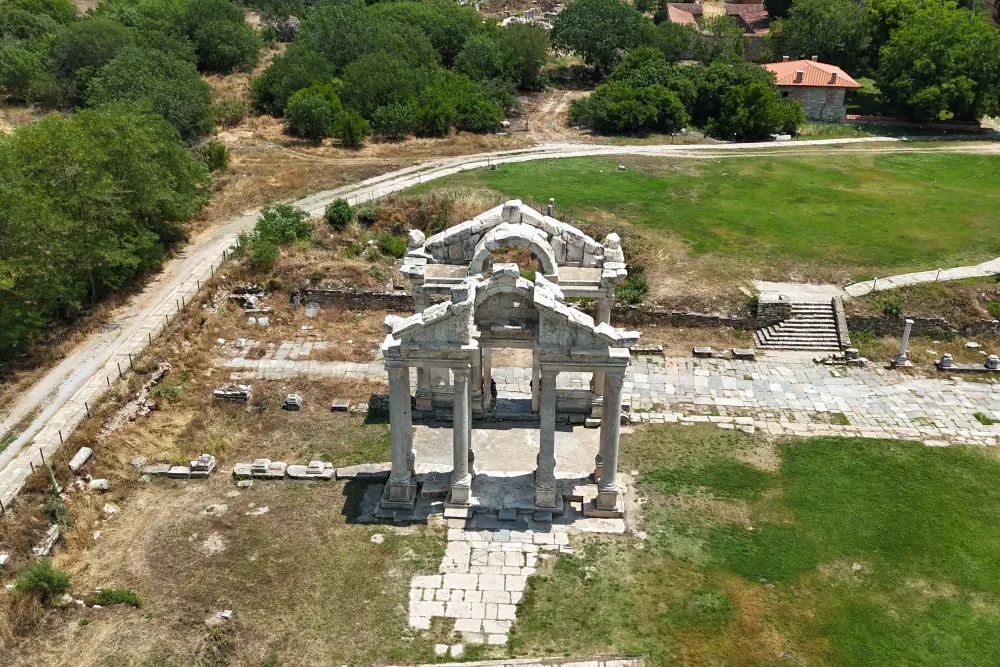
Aphrodisias is one of
Turkey’s most remarkable ancient cities, celebrated for its artistic excellence
and well-preserved ruins. Located in southwestern Anatolia, this ancient city
was dedicated to Aphrodite, the goddess of love and beauty. Aphrodisias
stands out not only for its religious importance but also for its role as a
major center of sculpture and culture in the ancient world.
The Cult of Aphrodite
The city took its name
from Aphrodite, whose sanctuary formed the spiritual heart of Aphrodisias.
Worship of the goddess shaped the city’s identity and attracted visitors from
across the region. Over time, the sanctuary evolved into a monumental temple, reflecting
both religious devotion and architectural ambition.
A World-Renowned
Center of Sculpture
Aphrodisias became famous
throughout the Roman world for its sculpture school. Skilled artisans produced
statues, reliefs, and decorative elements that were exported to distant cities.
The abundance of high-quality marble in the region played a key role in this
artistic success. Many original sculptures can still be seen today in the
on-site museum, offering rare insight into ancient craftsmanship.
The Sebasteion Complex
One of the most
impressive monuments in Aphrodisias is the Sebasteion, a richly
decorated ceremonial complex dedicated to Roman emperors. Its detailed reliefs
combine mythological scenes with imperial imagery, showcasing the city’s
artistic sophistication and political awareness. The Sebasteion is considered
one of the finest examples of Roman art in Anatolia.
The Stadium and Urban
Life
Aphrodisias is home to
one of the best-preserved ancient stadiums in the Mediterranean world. With
seating for tens of thousands of spectators, the stadium reflects the city’s
vibrant social life. Nearby, the agora, baths, and public buildings reveal a well-planned
urban center designed for both civic and cultural activities.
The Temple and
Christian Transformation
During the late Roman
period, the Temple of Aphrodite was transformed into a Christian basilica. This
architectural adaptation illustrates the city’s ability to evolve while
preserving its core structures. The transformation adds another historical
layer to Aphrodisias, connecting pagan and Christian eras within a single site.
Aphrodisias as a
UNESCO World Heritage Site
Today, Aphrodisias is
recognized as a UNESCO World Heritage Site, praised for its exceptional
state of preservation and artistic value. Walking through the ruins feels
immersive and unhurried, allowing visitors to appreciate the harmony between
architecture, sculpture, and landscape.
Final Thoughts
Aphrodisias is a city where art and history are inseparable. Its dedication to beauty, mastery of sculpture, and well-preserved monuments make it one of Turkey’s most inspiring archaeological sites. Visiting Aphrodisias offers a deep connection to the artistic spirit of the ancient world and leaves a lasting impression of elegance and creativity.